



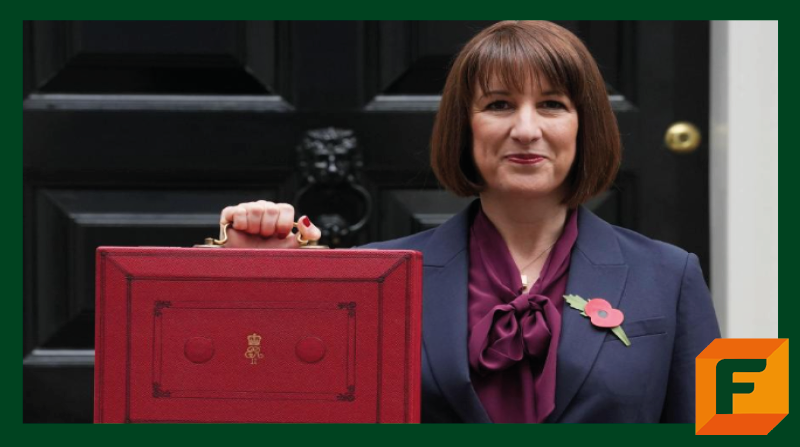
Autumn Budget 2025: Implications for Property Investors and Occupiers
Friday 5 December 2025
Flude Property Consultants – Market Commentary
After months of speculation, premature leaks, and shifting expectations, the Autumn Budget finally arrived, and with it, a sense of relief that the sector can now begin to move forward. The Chancellor’s speech did not deliver the sweeping reforms many in commercial real estate had hoped for, but it did bring clarity. In a market where confidence has been fragile, clarity matters.
Despite the political noise surrounding the build up, the reaction from financial markets was calm and decisive. UK REITs lifted, gilt markets remained steady, and the overall message was clear: investors were reassured rather than rattled. That sentiment was reinforced almost immediately by JP Morgan’s announcement of its intention to deliver a major new office campus in London. At a time when the narrative has often focused on uncertainty, such a commitment is a reminder that the UK’s long term fundamentals continue to attract global capital.
Against this backdrop, we consider what the Budget means for commercial property across the South Coast, a region where supply constraints, cost pressures and shifting occupational patterns remain central themes.
National Overview
The Budget landed not as a dramatic turning point but as a steadying influence. After months of delay and speculation, the confirmation of previously trailed measures provides the consistency businesses have been waiting for. Markets responded in kind, with positive movement in REIT share prices and growing expectations that an interest rate cut could be within sight.
While modest in scope, the measures offer a starting point from which occupiers and investors can make more confident decisions. The sense of “waiting to see what happens” that has characterised much of 2024 and 2025 is beginning to shift into a more forward-looking posture.
The Budget itself comprised a series of targeted adjustments rather than wholesale change. Core measures include:
- A permanent reduction in the business-rates multiplier for retail, hospitality and leisure (RHL) properties.
- A higher multiplier for properties with rateable values above £500,000.
- Increased property income tax rates to be introduced from 2027–28.
- A continuation of the freeze on income tax thresholds.
- Regional investment funding and reinforcement of the Government’s industrial strategy.
- No significant intervention to improve commercial development viability or accelerate planning reform.
While limited in scope, the Budget provides a foundation on which occupiers and investors can plan with greater certainty.
Flude Commentary
Senior insights from across the firm
Andrew Halfacree, Director
Business Rates: Limited Reform, but Clearer Direction
“The confirmation of a permanently reduced business-rates multiplier for retail, hospitality and leisure occupiers will be welcomed across the South Coast, particularly in towns and cities where these uses form a substantial part of the local economy. This provides a degree of stability for operators who have experienced sustained cost pressures in recent years.
The introduction of a higher multiplier for properties with rateable values above £500,000 is unlikely to have a material impact in Brighton & Hove specifically, as only a small number of commercial buildings fall within this threshold. The measure is more relevant to larger regional logistics facilities, larger industrial estates and major office campuses elsewhere in the UK.
For the South Coast, the broader story is not one of increased liabilities for most occupiers, but rather the continued absence of substantive structural reform. Long-standing concerns around the complexity of the system, the burden on smaller businesses and the slow pace of wider modernisation remain unresolved. The upcoming Draft 2026 Rating List will nevertheless provide greater clarity on future liabilities and allow occupiers and landlords to plan with more certainty.”
Mark Minchell, Director
Investment Market: Stability Returning, but Challenges Remain
“The investment market has been characterised by caution during the past 18 months, with financing conditions, political uncertainty and limited development activity all contributing to subdued transaction volumes. The steady market response to the Budget is therefore welcome and indicates that stability is gradually returning.
The UK commercial property investment market in 2026 is expected to show cautious optimism, with flexible workspaces, sustainability, and technology integration driving demand nationally. On the South Coast, investors will likely see opportunities in logistics hubs, coastal regeneration projects, and mixed-use developments. We also anticipate an accelerated recovery in High Street retail in better towns and cities which will increase rental values and sharpen yields in time.
Sector Analysis
Retail, Hospitality and Leisure
The permanent reduction in the RHL business rates multiplier represents the most tangible immediate benefit to property occupiers within the Budget. Many South Coast towns rely heavily on hospitality and visitor-driven activity, and this enhanced stability in rating liabilities will be particularly valuable during a period of economic caution. However, continued pressure on household incomes may limit short-term gains, particularly for discretionary-spending businesses.
Industrial and Logistics
Demand for best in class industrial and logistics space in the South East continues to outstrip supply, and the Budget does little to alter that trajectory. What it does do, however, is reinforce the divide between prime and secondary stock. Businesses seeking well-specified facilities will remain active, while those occupying older units may face a more complex equation as operating costs rise and refurbishments become harder to defer.
Office Market
The office sector continues to evolve at pace. The Budget may not have introduced significant reforms, but its stabilising effect is nonetheless important. With development pipelines constrained and modern, ESG compliant space limited, occupiers are increasingly strategic in their decisions. In Brighton and Hove in particular, the lack of new supply continues to shape the market, encouraging early engagement, decisive action and a focus on future-fit accommodation.
Residential Investment and Mixed-Use Landlords
The increase in property income tax rates from 2027–28 is likely to place further pressure on private landlords and may accelerate the contraction of the private rented sector. This will have implications for mixed-use property owners across the region, particularly where rental supply is already limited.
Regional Investment and Infrastructure
Although the South Coast is not the principal focus of the £13 billion in regional investment funding announced by the Chancellor, improvements in neighbouring regions, as well as increases in planning system capacity, may produce indirect benefits. However, further detail will be required to determine whether these measures will translate into more timely planning decisions or improvements in local infrastructure delivery.
Looking Ahead
The Autumn Budget will not be remembered for sweeping change. Instead, its significance lies in drawing a line under a period of uncertainty and providing the sector with something it has lacked for much of the past year: direction.
For South Coast markets, the message is nuanced. Retail, hospitality and leisure operators benefit from rating relief; private landlords face further pressure; industrial and logistics occupiers must continue to plan for rising operational costs; and office occupiers remain constrained by a limited pipeline of modern space.
Yet perhaps the most important takeaway is the shift in sentiment. A calm market reaction, strengthened by high profile investment commitments such as JP Morgan’s new London campus, signals a turning point in confidence. If interest rates begin to ease later in 2026, as now seems increasingly possible, the sector may enter a more active and opportunity-rich phase.
Flude Property Consultants is available to support owners, investors and occupiers in navigating the implications of the Autumn Budget, the forthcoming Draft 2026 Rating List and the wider market environment. If you require tailored advice on your property, portfolio strategy or future occupational requirements, please contact a member of the team and we will be pleased to assist.